The Ground Is Alive: What Biological Soil Crust Is, and Why One Footstep Can Undo Centuries

That bumpy, blackened patch of ground next to the trail isn't dirt. It's alive, it's been growing since before you or your grandparents existed, and a single boot print can kill it instantly.
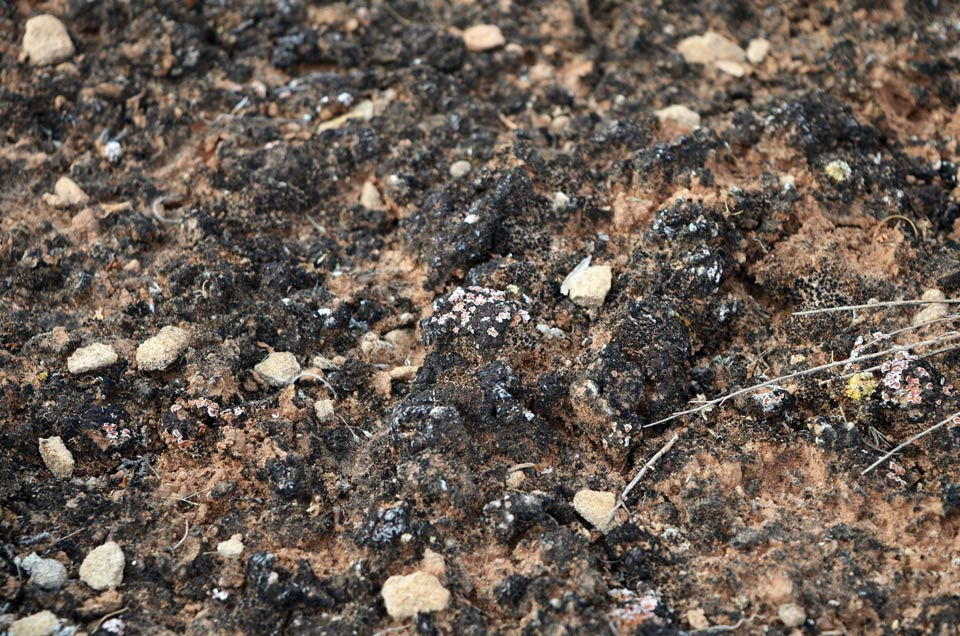
Biological soil crust is a living layer of cyanobacteria, lichen, moss, algae, and fungi that binds desert soil together into a crust. According to the National Park Service, it covers much of the ground across the Colorado Plateau's high desert, including parks like Canyonlands, Arches, and Capitol Reef, and in some places it makes up more than 70 percent of the living ground cover. It isn't a byproduct of the desert. It's one of the things holding the desert together.
What Biological Soil Crust Actually Is
Look closely at the ground in a place like Canyonlands and you'll notice two very different textures. Some patches are flat, pale, and look like ordinary dirt. Others are dark, knobby, almost blistered-looking. The second kind is mature soil crust, and depending on the spot, it can be centuries, even thousands of years, old.
The organism doing most of the work is cyanobacteria, sometimes called blue-green algae, one of the oldest life forms on the planet. Cyanobacteria are part of what changed Earth's early atmosphere from carbon dioxide-heavy to oxygen-rich enough to support life as we know it. In the desert today, they're still shaping the ground under your boots.
How It Forms: Cyanobacteria at Work
Here's the mechanism: when soil crust gets wet, the cyanobacteria become active and move slowly through the top layer of soil, leaving behind sticky fibers as they go. Those fibers glue soil particles together. When the crust dries out again, the cyanobacteria go dormant, but the sticky fibers stay put. Over years, lichen and moss move in on top of that foundation, and the crust thickens and darkens into the bumpy black surface you see on mature crust.
Why It Matters in the Desert
Biological soil crust does three jobs that make the high desert livable. It locks loose soil in place, which is a major reason the Colorado Plateau isn't just a sea of shifting sand dunes. It acts like a sponge, holding onto water that would otherwise run off or evaporate, giving plant roots something to draw from in a landscape that gets very little rain. And it pulls nitrogen out of the air and converts it into a form plants can actually use, a service most desert plants depend on to survive.
Take the crust away, and you don't just lose a patch of interesting-looking ground. You start losing the plants, water retention, and erosion control that depend on it.
Look Closer: Try This on Your Next Hike
Next time you're on a desert trail, try spotting both stages of crust without stepping off the path. Look for the flat, light-colored young crust versus the dark, bumpy mature crust; sometimes you'll see lichen or moss growing directly out of it. Notice where small plants tend to cluster. There's a good chance mature soil crust is nearby, quietly making that growth possible.
Responsible Exploration: Leave No Trace
This is one of the more fragile things you'll encounter outdoors. The National Park Service notes that a single footprint can destroy the soil crust directly beneath it, and recovery is slow: a thin layer of new crust may return in five to seven years, a fully mature crust can take around fifty years to rebuild, and the lichens and mosses on top may need centuries. Stay on designated trails at all times, and if there's no established trail, stick to slickrock or sandy washes where crust doesn't grow. It's one of the simplest Leave No Trace habits with an outsized payoff.
If noticing things like this, the stuff most people walk straight past, is your kind of trail moment, that's exactly what Look Closer: 25 Things Most Hikers Walk Right Past is built around. Soil crust is one of the twenty-five.
Related Reading
More Look Closer trail science articles are coming soon, covering lichen, wind-shaped trees, animal tracks, and glacial evidence.
Comments